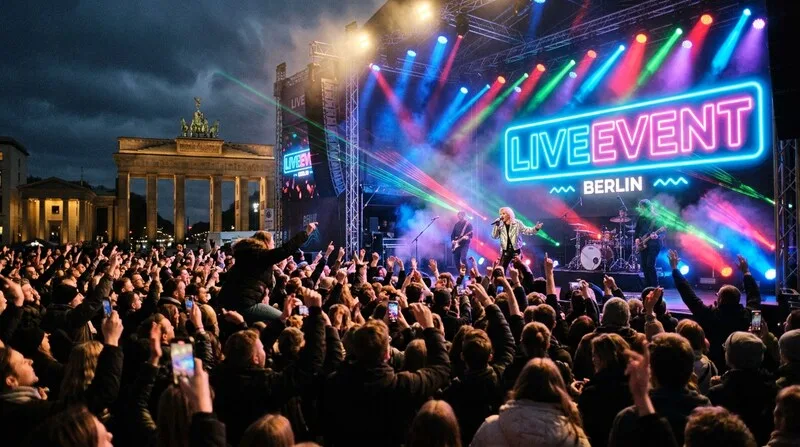



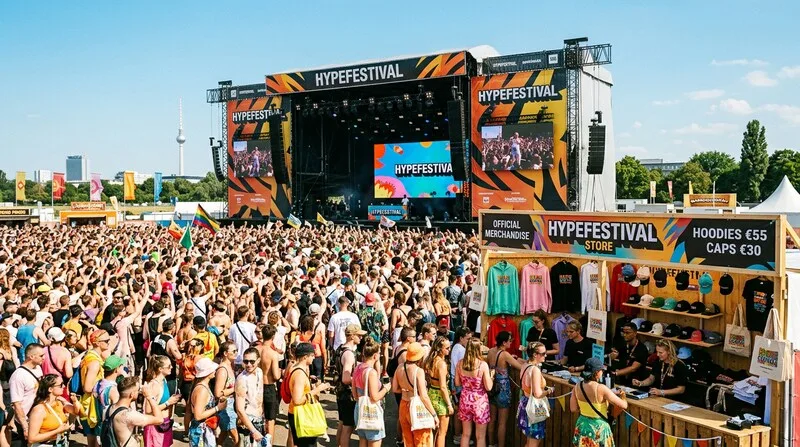
Trade shows represent one of the largest line items in many B2B marketing budgets — and one of the most inconsistently measured. A basic 10sqm booth at a major industry fair costs €5,000-15,000 in floor space alone, before stand construction, travel, accommodation, staff time, materials, and pre/post marketing. A premium island booth at CeBIT, Hannover Messe, or SXSW can exceed €500,000 all-in. Yet 81% of trade show attendees have buying authority, and 67% represent new prospects not in the exhibitor's existing database. The opportunity is real. The execution separates brands that convert it into pipeline from those that just pay for expensive branding.
Why Trade Shows Still Matter
In an era of remote work, digital-first sales, and content marketing, the physical gathering of an industry still delivers something no digital channel can replicate: concentrated buying authority in a defined time and space. Decision-makers who are impossible to reach via cold outreach — who ignore LinkedIn messages and delete cold emails — attend trade shows specifically to evaluate vendors and discover solutions.
The dwell time and engagement quality at a trade show are also unmatched. A visitor who stops at your booth and engages with a demo for 10 minutes has invested attention equivalent to reading ten blog posts. The trust and relationship built in a face-to-face conversation compresses months of typical digital nurturing into a single interaction.
Trade shows also provide competitive intelligence, industry trend validation, media coverage opportunities, and partnership-building that pure digital channels cannot replicate. The brands that have written off trade shows as too expensive or old-fashioned are typically the ones that were executing them badly, not the ones that had genuinely optimised the channel.
The ROI Calculation
Before committing to any trade show, build the ROI model. Total investment = floor space + stand build + graphics/materials + travel and accommodation for all staff + staff time (fully loaded cost) + pre-show marketing + post-show follow-up marketing. For a mid-range presence at a major European B2B fair, this typically totals €25,000-80,000.
Average cost per qualified lead at a trade show runs approximately €180 based on industry benchmarks — higher than many digital channels per lead, but significantly lower when adjusted for lead quality. Trade show leads close at 2-3x the rate of equivalent digital leads due to the relationship foundation established in person. Calculate target leads needed to achieve break-even and profitable ROI before committing, and build that into your team's booth objective metrics.

Pre-Show: 6 Weeks Out
The brands that generate the most trade show ROI do the majority of their lead generation work before the event opens. Six weeks out, the priority is scheduling. Use the attendee list (most major shows publish attendee data or enable pre-registration matchmaking) to identify target accounts and book meetings in advance. An inbox-sized meeting calendar on day one of the show is worth more than any amount of booth traffic.

Send personalised outreach to existing prospects and customers: "We'll be at [Show] — let's use this as a chance to finally meet in person." Send targeted invitations to your top 50 target accounts with a specific value-oriented reason to visit (a product launch, a demo, a private briefing). Create event-specific content in the weeks before — a report, a benchmark study, a prediction piece — that gives media and attendees a reason to seek you out. Use LinkedIn events and show-specific hashtags to signal your presence to the community ahead of time.
Booth Design That Attracts Decision-Makers
A booth that attracts decision-makers is built on one principle: communicate the core value proposition in three seconds from ten metres away. Everything else is secondary. If a busy executive glancing down the aisle cannot instantly understand what you do and why it matters, the booth has failed its primary function.
Design principles that consistently perform: vertical height (tall structures and hanging banners increase visibility exponentially over the floor plan area), open layouts (remove barriers to entry — counters across the front of a booth send a psychological "keep out" signal), activity or motion (a live demo, a screen with movement, or a human interaction always draws more attention than static displays), and a clear primary message hierarchy (company name and category at the top, primary value proposition in the middle, call to action or product visual at eye level).
Avoid: cluttered messaging on multiple panels that require reading, chairs that invite staff to sit and appear disengaged, gimmick-led designs where the gimmick overwhelms the message, and branding so creative that visitors cannot determine what the company actually does.
Lead Capture Strategy
Badge scanning technology (provided by most show organisers) is the baseline, not the goal. A scanned badge tells you someone visited — it tells you nothing about their buying intent, timeline, or budget. Build a lead qualification layer on top of badge scanning.
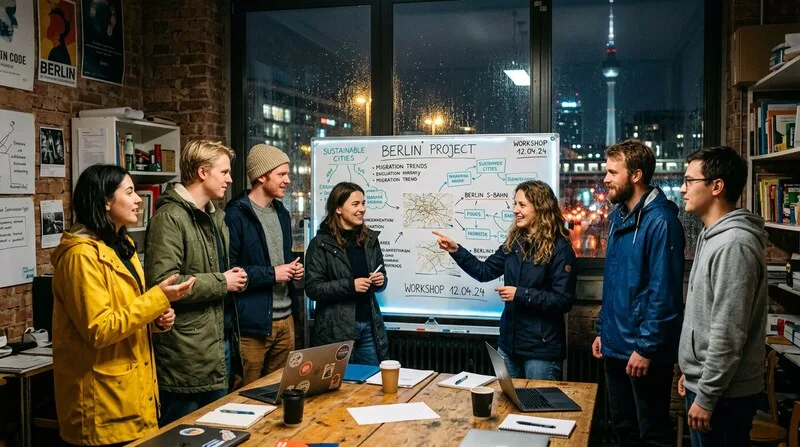
Train booth staff to qualify every visitor against four criteria within the first two minutes of conversation: role (are they a decision-maker or influencer?), timeline (are they evaluating now or just browsing?), budget (do they have authority to purchase?), and pain point (are they experiencing the problem your product solves?). Record qualification notes in real time via a lead capture app or CRM mobile integration, not on paper forms that get transferred inaccurately later.
Categorise leads at point of capture: A (hot — follow up within 24 hours), B (warm — follow up within 1 week), C (cold — add to nurture sequence). This categorisation is perishable — try to do it at the show, because notes and memories degrade within 48 hours of returning from an event.
Live Demos and Product Launches
Product launches and live demonstrations at trade shows deliver the highest ROI activity per booth square metre. A well-executed product launch at the right show can generate media coverage, social content, industry buzz, and qualified leads simultaneously. The announcement should be embargoed to media before the show and released at a specific time on the first day — generating both advance buzz and live-show coverage.
Live demos should be scheduled, not ad-hoc. Scheduled demo sessions (every 30 or 60 minutes) create artificial scarcity and urgency, ensure your best presenter runs every session, and allow efficient crowd management. A scheduled demo with 8 people engaged for 15 minutes delivers more pipeline than 25 people glancing at a passive screen.
Post-Show Follow-Up (The Most Neglected Phase)
The post-show phase is where the majority of trade show ROI is either captured or lost — and it is the most consistently under-invested phase in trade show execution. Research consistently shows that 80% of trade show leads receive no follow-up within 5 days, and 60% of A-grade leads are never contacted at all. This is not primarily a motivation problem; it is a process problem.
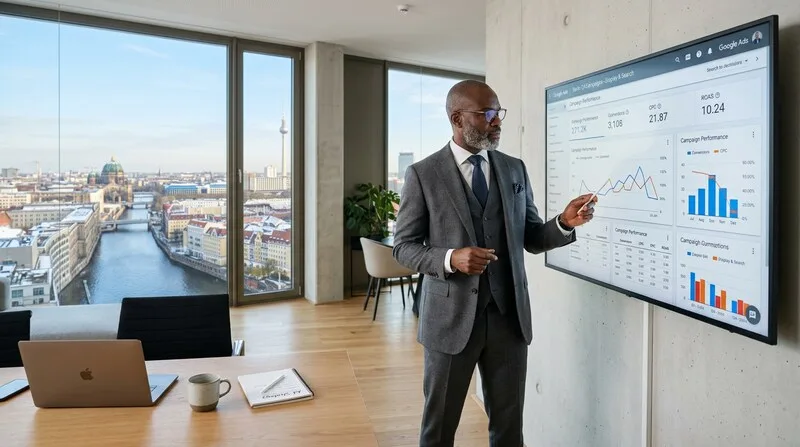
Build the post-show follow-up process before the event, not after. Define: who owns each lead category, what the first contact message looks like (personalised to booth conversation, not a generic email blast), what the follow-up cadence is (day 1 for A leads, day 3 for B leads), and what the offer is (a demo, a proposal, a specific resource). Load all A-lead emails into a queue before the show ends so they deploy automatically the morning after. Speed of follow-up is one of the strongest predictors of B2B deal conversion — a lead contacted within 24 hours is 7x more likely to convert than one contacted after 48 hours.
Digital Integration
Trade shows and digital marketing multiply each other's impact when coordinated. Run LinkedIn Matched Audience campaigns targeting the show's attendee list in the two weeks before and during the event. Create a show-specific landing page with a campaign-specific offer (a demo booking, a whitepaper download, a VIP pass giveaway) that can be driven from pre-show outreach, digital ads, and QR codes at the booth.
During the show, post real-time content — booth photos, demo clips, customer testimonials, session highlights — across LinkedIn and Instagram using the show hashtag. This extends reach beyond physical attendees and signals activity to your industry network. After the show, run a retargeting campaign to all website visitors who visited the show landing page, and to the LinkedIn audience that engaged with your event content.
Cost Benchmarks
| Presence Level | Booth Size | Total Budget (est.) | Typical Lead Target |
|---|---|---|---|
| Minimal | 6–9 sqm | €5,000–15,000 | 30–60 qualified leads |
| Standard | 12–24 sqm | €20,000–60,000 | 80–150 qualified leads |
| Premium | 36–72 sqm | €80,000–200,000 | 200–400 qualified leads |
| Flagship / Island | 100+ sqm | €200,000–500,000+ | 500+ qualified leads |
Frequently Asked Questions: Trade Show Marketing
Are trade shows worth it for B2B?
Yes — trade shows remain one of the highest-value channels for B2B lead generation when executed with discipline. 81% of trade show attendees have buying authority, and 67% represent new prospects not in the exhibitor's existing database. The key variable is execution: brands that invest in pre-show outreach, structured lead qualification, and rigorous post-show follow-up consistently report 4-6x ROI. Brands that treat trade shows as passive exposure exercises rarely justify the cost.
How do you measure trade show ROI?
The complete trade show ROI formula: (Revenue from event-sourced deals) / (Total event costs including booth, travel, staff time, materials, pre/post marketing). Track leads from first contact through to closed revenue, flagging event source in your CRM. Short-term indicators include: leads captured, qualified leads (MQLs), meetings booked, demos delivered. Longer-term: pipeline generated, close rate on event leads vs. other sources, and average deal size. Full ROI measurement requires a 6-12 month post-event tracking window for complex B2B sales cycles.
What makes a good trade show booth?
A high-performing trade show booth succeeds on three dimensions: it attracts (visible from 10+ metres, communicates primary value proposition instantly, uses height and motion), it engages (interactive demo, product to touch, conversation starter), and it qualifies (layout naturally separates serious prospects from browsers, staff are trained to ask qualification questions rather than pitch). The most common mistake is designing a booth that looks impressive but has no clear next step for interested visitors.