
In a world of digital overstimulation, people crave real experiences. Event marketing taps into precisely this need -- creating moments that are more powerful than any ad. Why live events are the most potent marketing tool and how to use them strategically.
Fashion Shows: Marketing as Spectacle
Fashion shows are the oldest form of event marketing in fashion. What began as simple presentations of new collections has become a global media event. The shows of Chanel, Louis Vuitton, and Balenciaga are less sales events than brand experiences.
Karl Lagerfeld transformed the Grand Palais in Paris into a supermarket (Chanel Fall 2014), a beach (Spring 2019), and even a rocket launch pad (Fall 2017). The show was the marketing -- millions saw the images online before a single garment hung in stores.
Pop-Up Stores: Scarcity as Strategy
Pop-up stores leverage the FOMO principle (Fear of Missing Out). A store that exists for only one week creates urgency. Glossier elevated pop-up stores to an art form with each location uniquely designed. Supreme perfected the principle of artificial scarcity with limited drops and long lines that became statements in themselves.

Brand Experiences: Experience Over Advertising
Brand experiences go beyond classic events. They create immersive experiences that make the brand tangible. According to Eventbrite, 78 percent of millennials prefer spending money on experiences over material goods.
- Nike House of Innovation: Interactive flagship stores with personalized experiences
- Red Bull Flugtag: Homemade flying machines crash into water -- pure entertainment
- Sephora Beauty Classes: Free makeup workshops in stores
Events as Content Machines
The greatest value of events today lies not in the event itself but in the content it generates. A well-planned event produces live streams, behind-the-scenes stories, professional photos, user-generated content, interviews, and video highlights.
According to BizBash, a single well-planned event generates content for four to six weeks of social media postings.
Measuring Event ROI
Successful event marketers measure in three dimensions: direct metrics (attendees, leads, sales), content metrics (content pieces created, social reach, earned media value), and long-term metrics (brand lift, 90-day conversion rate, repeat purchase rate of attendees).
Event Formats and Budget Guide
Not every brand needs a Paris fashion show. Event marketing scales from micro-activations to global spectacles. Here are the realistic formats and what they cost:

| Format | Budget Range | What It Includes | Best For |
|---|---|---|---|
| Micro-Activation | 500–5,000 EUR | Pop-up table, sampling campaign, meet-and-greet | High personal contact rate on a tight budget |
| Brand Experience Event | 10,000–50,000 EUR | Product launch, brand space, 100–500 guests | Content creation + direct brand connection |
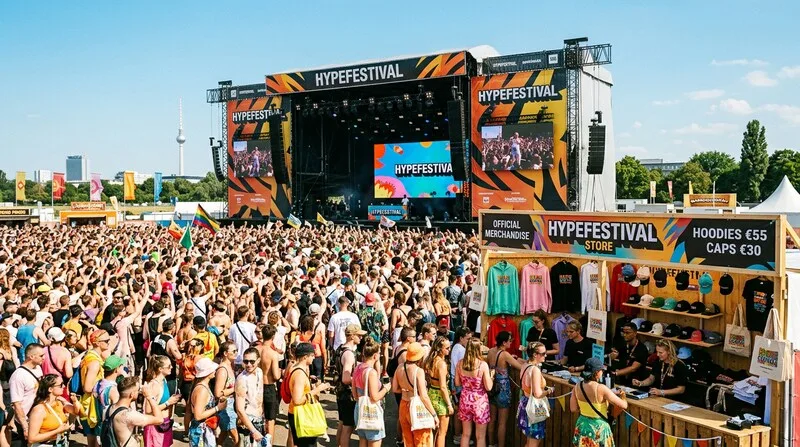
| Festival / Conference Sponsoring | 20,000–200,000 EUR | Branded stage, activation zone, headline sponsorship | Fastest path to a defined target audience |
| Major Brand Experience | 200,000–1,000,000+ EUR | Full brand installation, city-wide activation, live streaming crew | Maximum brand impact + global content reach |
Budget allocation best practice: spend 50% on the experience, 30% on content production and documentation, 20% on promotion and amplification. Events that are documented well generate 3-5x more ROI than undocumented ones.

Hybrid Events: The New Normal
The pandemic changed events permanently. Hybrid formats -- part physical, part digital -- are now the industry standard for brand events with global ambitions.
The advantages are clear: a physical event in Munich can simultaneously reach audiences in London, New York, and Tokyo via live stream. Nike product launches now generate more digital viewership than in-person attendance. The metaverse adds a third layer: virtual environments that mirror physical events, enabling global participation without travel.
For agencies and brands, this means every event now needs a digital production plan. Cameras, live streaming infrastructure, social media command posts, and post-production editing suites are no longer optional -- they are core to event ROI. Events that integrate with digital channels require the same coordination discipline as a full cross-channel campaign — the event is one node in the broader media strategy, not an island.
Key metrics for hybrid event success: simultaneous online viewership, peak concurrent viewers, post-event video views, UGC pieces generated, and earned media value from coverage. Brands that track these consistently see their event budgets justified faster and scaled more aggressively.
Conclusion: Events Are Irreplaceable
Digital marketing is efficient, but events are more emotional. A handshake, a shared experience, the energy of a room -- no algorithm can replicate that. The best events don't feel like marketing. They feel like invitations to something special. And that is precisely what makes them so effective.
Frequently Asked Questions: Event Marketing
How much does event marketing cost?
Event marketing costs vary enormously by scale. A local activation (pop-up stand, in-store event): €2,000–15,000. A branded experience at a trade fair or festival: €20,000–100,000 including booth design, staff, logistics, and materials. A mid-scale experiential marketing campaign (roadshow, branded pop-up in multiple cities): €100,000–500,000. A major brand activation (own event or headline sponsorship): €500,000–several million. The key ROI metric: cost per qualified interaction — divide total event cost by the number of meaningful brand touchpoints generated.
What is the difference between event marketing and experiential marketing?
Event marketing refers to organizing or sponsoring events (conferences, concerts, trade fairs) as a marketing channel. Experiential marketing is broader — it includes any marketing that creates immersive, participatory brand experiences, which can happen at events or in standalone activations. A booth at a trade fair is event marketing. A branded virtual reality installation in a shopping mall is experiential marketing. The distinction matters for planning: event marketing often requires booking lead times of 6–12 months; experiential campaigns can be designed and executed in 8–12 weeks.
How do you measure event marketing ROI?
Effective event ROI measurement: (1) Before the event: define specific, measurable goals — qualified leads, email sign-ups, samples distributed, media coverage value. (2) During: track every interaction (badge scans, app check-ins, coupon redemptions). (3) After: measure follow-up conversion rates — what percentage of event contacts converted to customers within 30/60/90 days? Also measure brand lift: post-event surveys show awareness and preference change in your target audience. Long-form KPI for B2B events: pipeline influenced within 90 days, tracked in your CRM with event source attribution.