TikTok Marketing for Brands: What Actually Works in 2026
TikTok has over 1.5 billion monthly active users. Average daily session time exceeds 45 minutes — more than Netflix. The platform processes more product discovery searches from users under 25 than Google does. That is not a trend anymore. That is the new infrastructure of consumer attention.
And yet most brands still get TikTok wrong. They treat it like Instagram with a soundtrack. It is not. TikTok has its own grammar, its own culture, its own rules about what spreads and what disappears in three seconds. The brands that understand this are winning campaigns at fractions of the CPM they pay elsewhere.
How the For You Page Algorithm Actually Works
The For You Page is the TikTok feed. Unlike Instagram, where posts surface primarily to followers, TikTok serves every video to a test audience — typically 200-500 accounts initially selected by topic and behavioral profile. If that test batch watches past the 3-second mark at a high rate, likes, comments, or shares, the algorithm escalates distribution to a broader audience. Then broader again. And again.
This is the single most important thing to understand. On Instagram, reach is proportional to followers. On TikTok, a brand-new account with zero followers can get 1 million views on its first video if the content clears the algorithmic threshold. Which means great content wins, regardless of account age or follower count. The playing field is genuinely level for the first few seconds.
The implication for brands: you do not need to build an audience before your content performs. You need to clear the 3-second hook test, the 30-second completion test, and the re-watch test. Optimize for those behaviors, not for subscriber growth first.
Native Content Always Beats Polished Ads
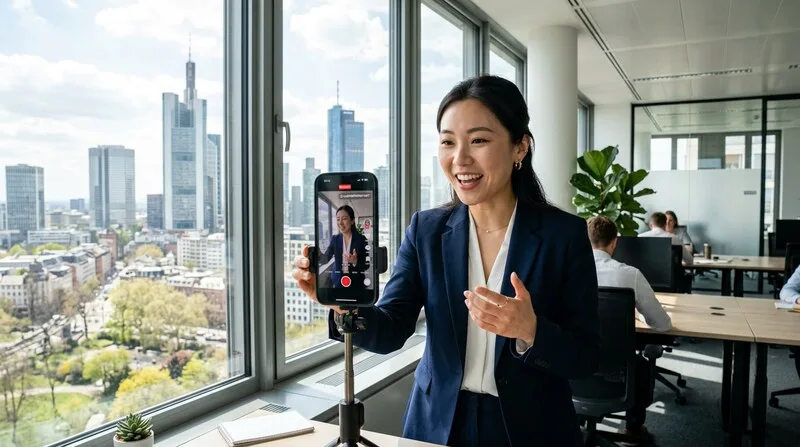
Stop repurposing TV spots for TikTok. The platform's audience has a finely tuned detector for ads that were not made for TikTok, and they scroll past them instantly. A 30-second video shot on an iPhone that opens with a genuine hook outperforms a EUR 50,000 agency production 9 times out of 10.
The reason is structural: TikTok's algorithm rewards watch time and completion rate. Ads that look like ads generate immediate swipe-offs — the worst possible engagement signal. Content that looks like content earns watch time and occasionally goes viral, which no amount of production budget can buy.
TikTok Ad Formats Explained
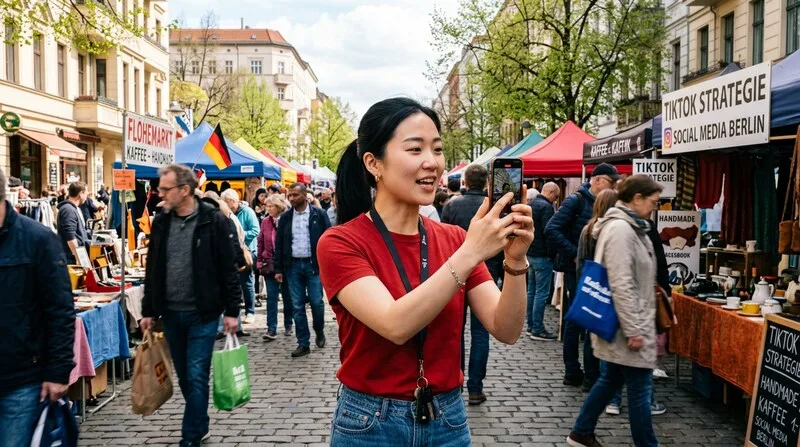
Understanding the format landscape helps you pick the right entry point for your budget and objective:
| Format | Min. Budget | Best For |
|---|---|---|
| In-Feed Ads | €50/day | Most campaigns — native FYP placement, linkable to landing page |
| Spark Ads | €50/day | Boosting organic/creator posts — keeps social proof on original |
| TopView | €50,000+ | Major launches — first content seen on app open |
| Branded Hashtag Challenge | €100,000–150,000 | Mass UGC generation — for national campaigns |
| Collection Ads | €50/day | DTC e-commerce — zero-friction in-app purchase |
In-Feed Ads: Standard paid ads that appear in the For You Page feed, looking identical to organic content. Full-screen, sound-on, up to 60 seconds. The primary format for most campaigns. Can link to a landing page, app store, or TikTok profile.
Spark Ads: Boost organic content — your own or a creator's — as a paid ad while keeping all engagement (likes, comments, shares) on the original post. This is TikTok's most powerful format because it combines paid reach with social proof. A creator post that already has 10,000 organic likes converts dramatically better when amplified than a blank new ad. Always negotiate Spark Ad rights in influencer contracts upfront.
TopView: The first piece of content a user sees when opening TikTok. Maximum visibility for major launches and brand moments. Premium pricing reflects this — typically reserved for national campaigns with EUR 50,000+ budgets.
Branded Hashtag Challenge: A challenge mechanic that invites users to create content around your branded hashtag. When it works, it generates massive UGC volume. Minimum investment for the full challenge package is EUR 100,000-150,000. Not appropriate for small brands, but the ROI from organic amplification can be extraordinary.
Collection Ads: An e-commerce format that lets users shop directly from the video without leaving TikTok. If you run a DTC brand, test Collection Ads before spending heavily on landing page traffic — the zero-friction purchase path measurably improves conversion rates.
Spark Ads and UGC: The Performance Combination
Traditional influencer marketing posts on the creator's own channel. UGC (user-generated content) creators produce content for your brand that you then run as paid ads from your own account. The distinction matters enormously for both cost and performance.
UGC is cheaper per asset, more scalable, and produces native-feeling content at volume. You are not paying for the influencer's reach — you are buying the creative. Then you amplify via paid with precise targeting. We regularly see UGC-based In-Feed Ads generate 30-50% lower CPMs than brand-produced creatives.
The best performing TikTok paid strategy we have seen combines both: find mid-tier creators (100K-500K followers) whose content performs well organically, run their posts as Spark Ads, and simultaneously have UGC creators producing fresh variations of winning formats for A/B testing in your own account. You get social proof from real creators and creative scale through UGC production.
Building a TikTok Content Calendar
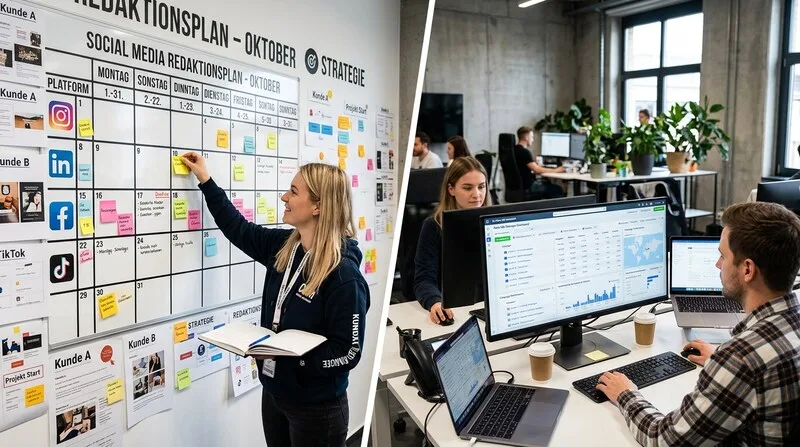
Most brand TikTok accounts fail because they cannot sustain volume. TikTok rewards accounts that post consistently, and the optimal posting frequency is 3-5 times per week — which most teams are not set up for.

The practical solution: batch-produce content. Dedicate one day per month to filming 12-20 raw videos. Edit across the following week. You now have a month of content that maintains posting frequency without constant production pressure.
Organize content into three pillars that reflect your brand purpose: one pillar educates (how-to, explainer, industry insight), one entertains (trending sounds, brand personality, behind-the-scenes), one converts (product demo, testimonial, offer). Never mix all three in one video. Test 5 videos per pillar, measure video completion rate, and double down on the pillar that clears 40%+ completion.
TikTok for B2B Brands
Yes, B2B works on TikTok. But only if you shift from selling to teaching. Short explainer videos from visible subject matter experts — the CTO, the strategist, the founder — generate qualified traffic that converts at rates that surprise most B2B marketers.
The format that consistently performs for B2B: a 45-60 second take on a specific industry problem, starting with a hook that frames the problem clearly ("Most B2B email campaigns fail for one reason..."), building to a specific insight, ending with an implied offer. No hard sell. No product demo. The call-to-action is "follow for more" and the conversion path is profile link to lead magnet.
Thought leadership beats product demonstration every time for B2B on TikTok. Your audience is on the platform to be entertained and informed, not to evaluate software.
When TikTok Is the Wrong Channel
Not every brand should be on TikTok. Be honest about this assessment before committing production resources:
If your product requires regulatory-compliant messaging that cannot be compressed to 45 seconds (insurance, pharma, certain financial products), TikTok's content format works against you. If your audience is primarily over 45, you are fishing in the wrong lake. If your brand has no ability to produce native-feeling video consistently — either in-house or through a creator network — the channel will underperform regardless of budget.
TikTok has the highest creative bar of any paid social platform. Mediocre content does not just fail to perform — it actively damages brand perception among the platform's sophisticated, ad-literate audience.
Measuring TikTok Performance
The metrics that matter for TikTok are different from standard social KPIs:

Video completion rate: What percentage of viewers watch your video to the end. Anything above 35% is strong for content over 30 seconds. Below 20% means the first 5 seconds are failing to hold attention.
Spark Ad engagement rate: Likes plus comments plus shares divided by impressions. Benchmarks vary by industry, but 3%+ is competitive. High engagement signals content the algorithm will continue distributing beyond your paid investment.
Cost per result: Define your result before you launch — click, add-to-cart, app install, lead form submission. Track this obsessively and iterate creative every 3-4 weeks. TikTok creative fatigue happens faster than any other platform because users consume so much content per session.
"TikTok doesn't reward perfection. It rewards personality. And personality, unlike production value, is something no budget can manufacture."
Frequently Asked Questions: TikTok Marketing for Brands
What type of content should brands post on TikTok?
The TikTok algorithm rewards content that keeps viewers watching, not content that looks polished. Formats with highest brand performance: educational mini-lessons (teach something relevant to your audience in 30–60 seconds), behind-the-scenes operations (authenticity builds trust faster than production quality), product-in-use demonstrations (show real results, not features), and trend participation with original brand twist. What consistently underperforms: direct product ads (viewers scroll immediately), overly produced brand videos that feel like TV commercials, and content that ignores the native TikTok aesthetic (text overlays, trending sounds, vertical orientation).
How many TikTok followers do you need to be effective as a brand?
Follower count is the wrong metric. TikTok's algorithm is unique in that new accounts can reach millions of views before accumulating 1,000 followers — if the content is compelling. What matters: Watch Time (average % of video watched), Shares (the highest engagement signal), and Comments (depth of interaction). A brand with 500 followers but 80% watch time per video will reach more people than a brand with 50,000 followers posting content with 20% watch time. Build for engagement quality first; follower count follows.
Should brands use organic TikTok or paid TikTok Ads?
Both serve different purposes and work better in combination. Organic TikTok builds long-term community, brand voice, and algorithmic presence — it is a compounding asset that improves over time. Paid TikTok Ads (especially In-Feed Ads and Spark Ads, which boost existing organic posts) deliver immediate reach and scale for specific campaigns. The most effective strategy: build organic content consistently (3–5 posts/week minimum) to develop a library of content; then invest paid budget into the posts that organically perform best — turning a €0 post with 10,000 organic views into a €2,000 campaign with 500,000 targeted views.