Outdoor advertising is the oldest paid media format in history — and in 2026, it has become one of the most technologically sophisticated. Programmatic DOOH (Digital Out-of-Home) merges the physicality and scale of billboard advertising with real-time bidding, audience data, and dynamic creative capabilities that were unimaginable a decade ago. If your media plan still treats OOH as a static, set-and-forget channel, you are leaving significant performance on the table.
What Is Programmatic DOOH
Traditional outdoor advertising works on a reservation model: you book specific screens or panels weeks or months in advance, pay a fixed price, and your creative runs for a defined period regardless of conditions. Programmatic DOOH replaces this with an auction-based model. Advertisers bid for digital screen inventory in near real-time through demand-side platforms (DSPs), with campaigns capable of going live within hours, not weeks.
The key distinction: programmatic DOOH is still OOH advertising — it reaches people in physical public spaces, not on personal devices. But the buying mechanism, targeting logic, and measurement capabilities are now fully digital. Leading DSPs like Vistar Media, Place Exchange, and Hivestack connect to inventory from thousands of digital screens across transit, retail, street, and entertainment environments.
How Real-Time Bidding Works for OOH
The programmatic DOOH auction works differently from online display. Because a screen displays one creative to everyone passing at a given moment, bids are not individual user-level auctions but rather impression-level bids for a screen-moment — a specific screen at a specific time slot. The DSP submits a bid (typically in CPM — cost per thousand impressions) for an opportunity to show on a given screen during a specific window.
The SSP (supply-side platform) run by the screen operator evaluates competing bids and awards the impression to the highest bidder. The entire process happens in milliseconds. From the advertiser's side, this looks like a standard programmatic buy: set audience parameters, define CPM bids and budgets, upload creative assets, and the platform handles screen selection and scheduling automatically.
One critical technical requirement: DOOH creative must be pre-produced in the correct aspect ratios and resolutions for each screen format. Unlike online display, there is no dynamic rendering at the moment of serve. Most DSPs support a library of creative variants that the system selects based on the specific screen being served.
DOOH Formats and Environments
Digital OOH screens span a wide range of environments, each with distinct audience profiles and creative requirements:
- Large-format street billboards: Maximum visual impact, typically 48-sheet or 96-sheet equivalent. Best for brand awareness campaigns. Dwell time is low (2-5 seconds for moving traffic) so creative must communicate instantly.
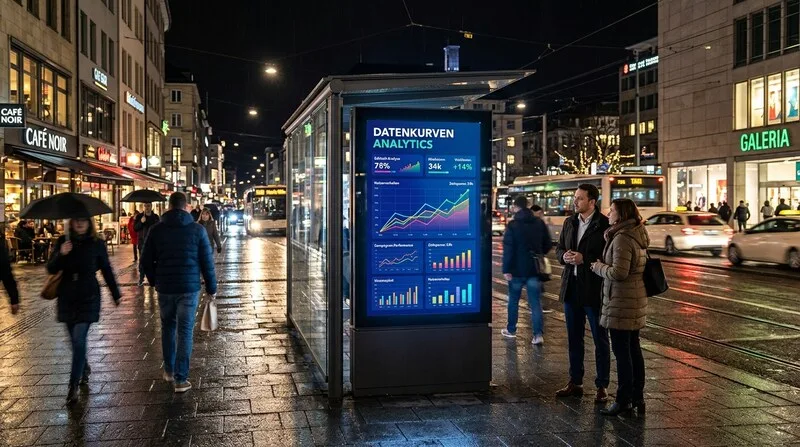
- Citylights and 6-sheet panels: Pedestrian-level screens at bus stops, tram stops, and walkways. Higher dwell time (15-45 seconds), closer proximity for reading text, and stronger engagement opportunity.
- Transit networks: Screens within metro stations, airports, and train stations. Captive audience with consistent dwell time. Premium inventory commands higher CPMs but delivers measurable audience quality.
- Retail media screens: In-store and shopping centre screens that reach consumers at or near point of purchase. Particularly effective for FMCG, fashion, and entertainment.
- Stadium and entertainment venues: Concentrated, dwell-heavy environments. Premium CPMs justified by audience quality and mood-state alignment.
Targeting Capabilities
Programmatic DOOH targeting is location-based and contextual rather than individual and cookie-based — a distinction that makes it inherently GDPR-compliant while still enabling meaningful audience precision.

Available targeting dimensions include: geographic (city, district, postcode), temporal (day of week, hour of day), demographic proximity (screens in areas where target demographics are known to congregate based on aggregated mobile data), contextual triggers (weather conditions, temperature, pollen count, sports scores), and retargeting sequences (show a follow-up message to mobile users who passed a DOOH screen via mobile ID matching).
Weather-triggered DOOH is a particularly effective tactic: a sunscreen brand activating only when UV index exceeds a threshold, a hot drinks brand triggering when temperature drops below 8°C, or an umbrella retailer activating on rain forecasts. These contextual triggers deliver message relevance that static bookings cannot achieve.
Integration with Digital Campaigns
The most powerful use of programmatic DOOH is as part of a coordinated cross-channel campaign. Modern DSPs enable synchronisation between DOOH and mobile/online channels — meaning someone who passes a DOOH screen can be retargeted with a related message on their phone within the same session. This OOH-to-mobile retargeting typically lifts mobile campaign conversion rates by 15-30% compared to mobile-only targeting.
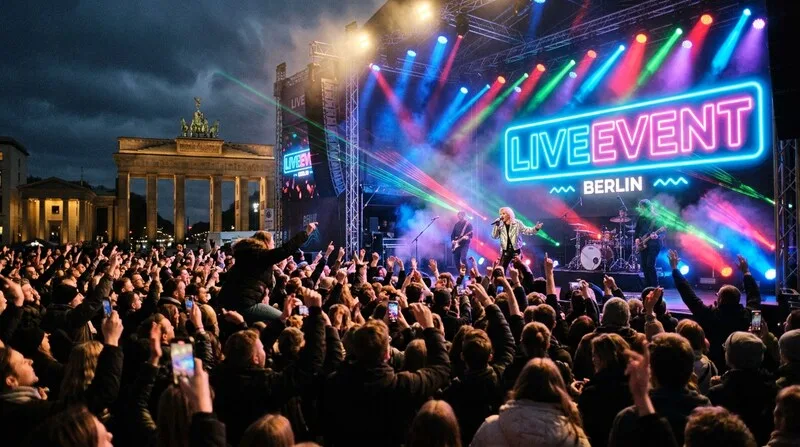
DOOH also integrates with social media amplification. Digital screens running at live events or in high-traffic locations generate organic social content as people photograph and share the displays — extending reach beyond the screen audience. Campaigns designed with this social amplification in mind can achieve earned media multiples of 2-5x on the paid screen investment.
Measurement and Attribution
Measuring DOOH has historically been the channel's greatest weakness. Traditional OOH measurement relied on foot traffic surveys and modelled reach estimates. Programmatic DOOH enables significantly more granular measurement through several methods:
- Verified Impressions: Leading SSPs provide screen-level verified delivery data — confirming when and where each ad was shown, with audience estimates based on mobile foot traffic data.
- Mobile footfall attribution: By matching anonymised mobile device IDs that passed a DOOH screen to subsequent store visits or website sessions, advertisers can measure campaign-driven footfall lift and online search uplift.
- Brand lift surveys: Surveys delivered to mobile users identified as having passed campaign screens, measuring awareness and consideration shift vs. control groups.
- Sales correlation: For brands with sufficient sales data, time-series analysis can correlate DOOH campaign activity with sales uplift in exposed markets vs. non-exposed control markets.
Costs and CPM Benchmarks
| Environment | Typical Reach | CPM Range | Best Use Case |
|---|---|---|---|
| Transit (bus stops, metro) | High volume, mixed demo | €4–12 | Mass brand awareness, commuter targeting |
| Retail (shopping centres) | High intent, near purchase | €6–15 | FMCG, fashion, point-of-purchase nudge |
| Street (billboards, citylights) | Broad urban reach | €5–20 | Brand building, launch campaigns |
| Stadia / Entertainment | Concentrated, high-dwell | €15–40 | Sponsorship activation, lifestyle brands |
Minimum meaningful programmatic DOOH campaigns typically start at €2,000–5,000 in media spend. Below that threshold, reach is too limited to generate statistically significant results. For national brand campaigns, budgets of €20,000–100,000 per flight achieve meaningful market penetration.
When to Use Programmatic DOOH
Programmatic DOOH performs strongest in campaigns where: physical presence and scale matter for brand credibility (product launches, rebrands), the target audience is reliably present in specific locations (commuters, shoppers, event attendees), contextual relevance can be exploited via triggers, or the campaign is part of a coordinated cross-channel strategy where DOOH drives top-funnel awareness that digital channels convert.
It is less suited to highly targeted direct response campaigns where precise individual-level conversion tracking is needed, or to hyper-local campaigns below a minimum viable scale. In those cases, targeted social or search advertising delivers better cost-efficiency.
Frequently Asked Questions: Programmatic DOOH
What is programmatic DOOH?
Programmatic DOOH (Digital Out-of-Home) is the automated buying and selling of digital billboard and screen advertising through real-time bidding platforms. Unlike traditional OOH which requires advance booking weeks ahead, programmatic DOOH lets advertisers purchase ad slots in real time, trigger campaigns based on conditions like weather or time of day, and adjust creative and targeting dynamically — all through a demand-side platform (DSP).

How much does DOOH advertising cost?
DOOH CPMs vary significantly by environment and market. Transit screens (bus stops, metro stations) typically range from €4-12 CPM. Retail environments (shopping centres, grocery stores) run €6-15 CPM. Premium large-format street screens in city centres cost €8-20 CPM. Stadium and entertainment venues command €15-40 CPM due to the concentrated, high-dwell-time audience. Minimum programmatic buys typically start around €2,000-5,000 for a meaningful campaign footprint.
Can you target specific audiences with DOOH?
Yes, programmatic DOOH offers audience targeting through aggregated and anonymised mobile data. Screens can be selected based on the demographic profiles of people who regularly pass through those locations, time-of-day targeting (commuters at 8am vs shoppers at 1pm), contextual triggers (weather, temperature, sports scores), and geo-targeting at postcode or district level. DOOH targeting is probabilistic and location-based — individual user tracking is not possible and not permitted under GDPR.