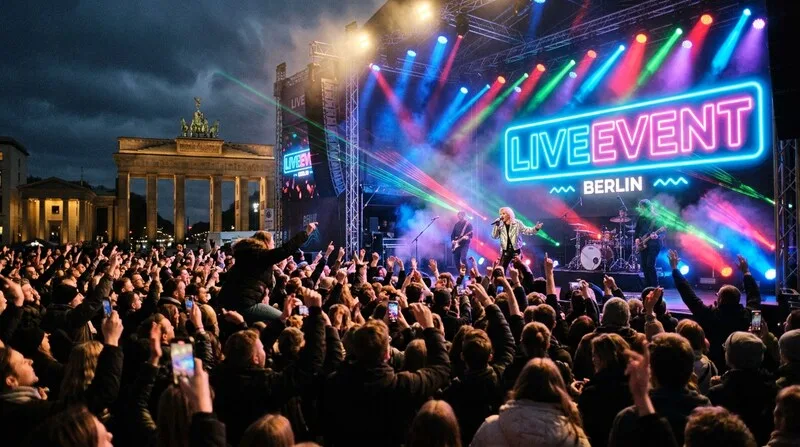
OOH in the Programmatic Age: Why Billboards Still Matter
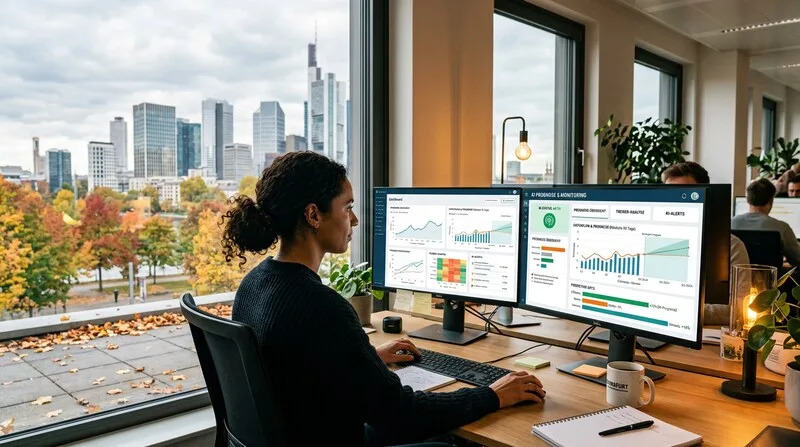
There's a certain irony in the fact that the oldest mass advertising medium is having its most innovative decade. While digital marketers chase diminishing returns on increasingly crowded social feeds, out-of-home advertising is quietly undergoing a transformation that makes it one of the most compelling channels in the modern media mix.
Billboards aren't just surviving the digital age. They're being reinvented by it.
Global DOOH (digital out-of-home) spend grew 16.3% year-over-year in 2025, making it one of the fastest-growing segments in all of advertising. Programmatic DOOH — the ability to buy outdoor advertising in real-time through automated platforms — now accounts for roughly 28% of total DOOH spend, up from just 9% in 2021. By 2027, that figure is projected to exceed 40%.
These aren't numbers that describe a dying medium. They describe a channel in the middle of a renaissance.

OOH is the only major advertising channel that can't be skipped, blocked, or muted. In an age of ad avoidance, that's a superpower.
Programmatic DOOH vs. Traditional OOH
Traditional outdoor advertising was a blunt instrument. You picked a location, negotiated a rate, booked a two-week flight, and hoped for the best. Measurement was essentially guesswork — traffic counts and estimated impressions that told you how many people might have seen your ad, but nothing about whether they noticed, remembered, or acted.
Programmatic DOOH changes every part of that equation.
Buying happens through demand-side platforms (DSPs) that let you purchase individual screen impressions in real-time, just like you'd buy a display ad online. You can set audience targeting parameters, dayparting rules, and budget caps. If a screen isn't delivering against your target audience at a given moment, you don't buy that impression. Your money only goes to work when the conditions are right.
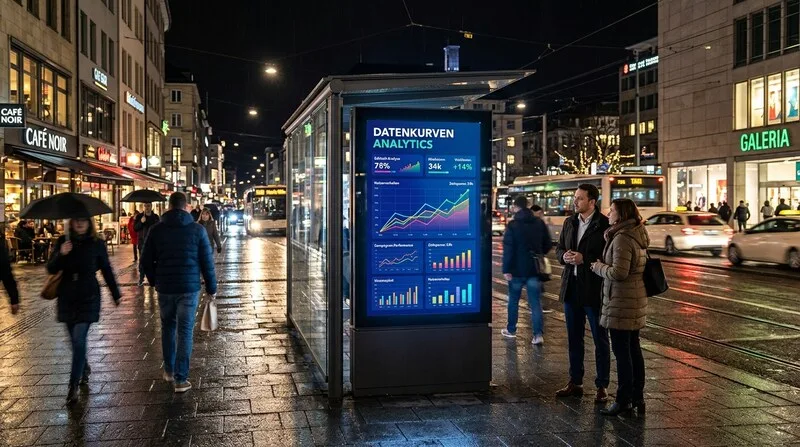
Targeting is informed by mobile data. By analyzing anonymized location data from mobile devices, DOOH platforms can model the audience composition at any given screen at any given time. A screen in a business district at 8:30 AM has a different audience than the same screen at 10 PM on a Saturday. Programmatic DOOH lets you target accordingly — running a B2B SaaS ad during rush hour and a lifestyle brand ad on weekends, all on the same screen.
Optimization is continuous. Traditional OOH was set-and-forget. Programmatic DOOH allows you to shift budget between screens, markets, and dayparts based on real performance data. Screens near a retail location showing high foot traffic? Increase bid. Screens in a market where awareness metrics are already saturated? Pull back. This is the same optimization logic that made digital advertising powerful, applied to physical media.

The Trigger-Based Creative Revolution
Perhaps the most underappreciated development in DOOH is dynamic creative optimization — the ability to change what a screen shows based on real-world conditions.

Weather triggers are the most common and arguably the most effective. A sunscreen brand activating only when UV index exceeds a threshold. A hot beverage brand appearing when temperature drops below 5°C. An umbrella retailer pushing product when rain probability exceeds 70%. This sounds simple. The performance impact is not: weather-triggered DOOH creative delivers 18-25% higher recall than static equivalents, because the ad feels relevant to the viewer's immediate physical experience.
Dayparting triggers adapt messaging to time of day. A coffee brand shows "Start your morning right" at 7 AM and "Afternoon pick-me-up?" at 2 PM. A restaurant chain shows lunch specials at 11:30 and dinner options at 5:30. The creative matches the viewer's mindset, which is what all good advertising aspires to do.
Event triggers activate around cultural moments. A sports brand activating near stadiums on match days. A fashion retailer appearing near event venues during fashion week. An airline running destination ads at train stations during holiday booking peaks. The screen becomes contextually aware.
None of this was possible five years ago. Now it's table stakes for any serious DOOH campaign.
The Billboard-Plus-Mobile Combo
Here's where OOH gets genuinely exciting for performance-minded marketers: the integration of outdoor exposure with mobile retargeting.
The mechanic works like this. Mobile device IDs that are detected within a defined radius of a DOOH screen during an active campaign are captured (anonymously, using aggregated location data from opted-in apps). Those device IDs are then added to a retargeting audience and served sequential digital ads — on social, display, or video — within 24-48 hours.
The result is a one-two punch that neither channel can deliver alone. The outdoor exposure creates broad, high-impact brand awareness. The mobile follow-up provides the click-through, the product page visit, the conversion. Together, they close the gap between physical and digital that has traditionally made OOH hard to measure.
The data supports this decisively. Campaigns using the billboard-plus-mobile retargeting combination consistently show 2-4x higher ad recall than mobile-only campaigns. Click-through rates on the mobile retargeting component are 45-70% higher when preceded by DOOH exposure. And brand lift studies show that the combination drives 2.1x more purchase consideration than either channel in isolation.
The billboard creates the memory. The mobile ad activates it. Together, they do what neither can do alone.
Measurement Has Caught Up
The historic knock on OOH was always measurement. "I know half my advertising is wasted; I just don't know which half" — the famous Wanamaker quote that outdoor advertisers could never really refute.
That's changed. Modern OOH measurement combines four complementary data sources:
| Method | How It Works | Best For |
|---|---|---|
| Footfall attribution | Mobile location data tracks store visits after OOH exposure | Retail, QSR, automotive |
| Brand lift studies | Pre/post surveys, exposed vs. control groups | Awareness and consideration campaigns |
| Mobile retargeting conversion | Click-throughs from mobile ads served after OOH exposure | Direct response, app downloads |
| Sales uplift modeling | Statistical comparison of activated vs. control markets | FMCG, retail with POS data |
Is this measurement as precise as a pixel-level digital campaign? No. But it's far more robust than the industry's "estimated traffic counts" of a decade ago. And for channels that operate at the top of the funnel — where the impact is on memory and perception rather than immediate clicks — this level of measurement is more than sufficient to justify investment.
Why Smart Media Plans Include OOH
The case for OOH in 2026 isn't nostalgic. It's strategic.
In a media landscape where digital ad fatigue is real — the average consumer is exposed to 6,000-10,000 digital ads per day and has learned to ignore most of them — outdoor advertising offers something genuinely scarce: unskippable, undistracted attention. A well-placed DOOH screen in a transit hub captures attention for an average of 3-5 seconds. That doesn't sound like much until you compare it to the 1.3-second average viewable time for a social media ad.
OOH also delivers reach that's increasingly hard to achieve in digital-only plans. As audiences fragment across platforms and algorithmic feeds become harder to predict, a strategically placed network of screens in high-traffic locations guarantees the broad reach that brand-building requires.
DOOH campaigns generate the most measurable ROI when combined with digital retargeting. See how this works in practice in our breakdown of retargeting fundamentals — the mobile retargeting loop that follows DOOH exposure is one of the highest-efficiency combinations in modern media planning. And for budget framing, the marketing budget guide covers OOH cost benchmarks alongside all other channels.
Billboards aren't a relic of the past. They're a technology platform that's finally getting the software it deserves. And for brands that know how to use them, they're one of the most powerful tools in the 2026 media arsenal.
Frequently Asked Questions: Programmatic OOH Advertising
What is programmatic OOH advertising?
Programmatic OOH (Out-of-Home) advertising applies the real-time bidding and data-targeting logic of digital advertising to physical billboard and screen placements. Instead of buying a fixed panel for a fixed period (a 2-week poster campaign), programmatic OOH allows brands to buy specific impressions on digital screens — showing their ad at certain times of day, in specific locations, triggered by weather, foot traffic, or audience data. A retailer can now show their ad on digital screens near their store only during business hours, only when foot traffic is above a threshold, and only in weather conditions that make their product relevant (a coffee ad when it's cold, a beer ad when it's warm).
How much does programmatic OOH advertising cost?
Programmatic DOOH (Digital OOH) CPMs in Germany typically range from €5–25 depending on format and targeting. Premium digital billboards in high-footfall city centers: €15–25 CPM. Transit advertising (airports, train stations): €8–18 CPM. Shopping mall digital screens: €5–12 CPM. These CPMs are calculated on the estimated number of people in view of the screen at the time of display — known as 'opportunity to see' (OTS). Programmatic OOH minimum spend is typically €2,000–5,000 per campaign, making it more accessible than traditional OOH contracts (which often require minimum commitments of €10,000+).
How does programmatic OOH targeting work?
Programmatic OOH targeting layers: Location targeting (screens within a defined radius of your store or event); daypart targeting (show ads only during commute hours, lunch breaks, or specific dayparts); audience index targeting (screens in locations where your target demographic is over-represented, based on anonymized mobile location data); weather targeting (trigger ads based on real-time weather conditions); and retargeting (serve digital ads to mobile devices that have been physically near your OOH screens). Privacy note: all location data used in programmatic OOH is anonymized and aggregated — individual user tracking is not involved. The combination of location precision and contextual relevance makes programmatic OOH highly complementary to digital campaigns.