How We Generated 62M Impressions for a Beverage Brand
Summer 2025. A leading European beverage brand came to us with a challenge that looked simple on paper but was anything but. They needed a pan-European summer campaign that would drive brand awareness among 18-34 year olds across six markets — Germany, France, Spain, Italy, the Netherlands, and Poland — while delivering measurable retail uplift within a 12-week window.
The budget was significant but not unlimited. The timeline was aggressive. And the brief had a constraint that made it interesting: no traditional TV. The brand's internal data showed that their core audience had essentially stopped watching linear television. The 18-34 demo was spending an average of 4.2 hours per day on mobile and just 38 minutes on live TV. The media plan needed to go where the eyeballs actually were.
Here's how we built a campaign that generated 62 million impressions, 3.2 million engagements, an 18% lift in brand awareness, and a 2.4x return on ad spend.
The Challenge
The brand was well-established in Western Europe but facing a familiar problem: it had become wallpaper. Category penetration was high — roughly 72% of the target audience had purchased the product in the past 12 months — but brand salience was declining. They were being bought out of habit, not preference. Younger consumers saw the brand as their parents' choice. Something reliable but not exciting.
The competitive landscape made this worse. Three challenger brands had entered the European market in 2024-2025, each with aggressive digital-first marketing strategies and a fraction of the brand baggage. Market share had slipped 2.3 points in the preceding 18 months. Not catastrophic, but the trajectory was clear.
The objective wasn't just awareness. It was reappraisal — getting the target audience to reconsider a brand they'd mentally filed under "boring."
The hardest marketing challenge isn't introducing a brand people have never heard of. It's making a brand people already know feel new again.
The Strategy
We built the campaign on three pillars, each designed to reach the audience at different moments in their daily lives and reinforce the same core message: this brand belongs in your summer, not your parents' pantry.

Pillar 1: The Creator Army
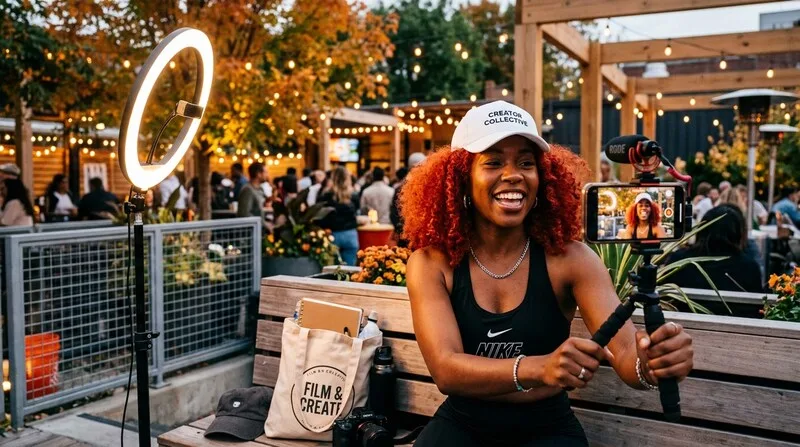
We assembled a network of 43 creators across the six target markets. Not megastars. The average following was 180,000. We deliberately skewed toward mid-tier and micro creators (50K-300K followers) because the data was unambiguous: engagement rates in the beverage category were 3.8x higher for creators under 500K followers compared to those above 1M.
Each creator received a physical kit — product, mood board, brand guidelines — but no script. This was deliberate. Over-scripted influencer content consistently underperforms authentic content by 40-60% on engagement metrics. We gave creators a theme ("unexpected summer moments"), three non-negotiable brand mentions, and the freedom to interpret the brief in their own voice.
The content mix was 70% TikTok, 20% Instagram Reels, 10% YouTube Shorts. We staggered launches across a 10-week window, with each market getting localized waves that built on the momentum of previous markets. Spain launched first (earliest summer), Germany and Poland last.

Pillar 2: Programmatic DOOH in Transit Hubs
Digital out-of-home was the campaign's reach multiplier. We activated across 1,200+ digital screens in metro stations, train stations, and airports in 14 cities. The buy was fully programmatic, allowing us to optimize in real-time based on foot traffic data, weather conditions, and time of day.
The creative was dynamic. On hot days (above 28°C), the messaging emphasized refreshment. On weekend evenings, it shifted to social occasions. In transit hubs near event venues, it pulled in relevant cultural moments. This wasn't gimmickry — dynamic creative optimization on DOOH consistently delivers 15-22% higher recall compared to static messaging.
Crucially, we linked the DOOH placements to mobile retargeting. Users who passed within a 200-meter radius of an activated screen were added to a retargeting pool and served sequential social ads within 24-48 hours. This "billboard plus mobile" combination has been shown to deliver 2-4x higher brand recall than either channel in isolation.
Pillar 3: Real-Time Content Optimization
We built a campaign dashboard that aggregated performance data from all 43 creators, the DOOH network, and paid social amplification in near real-time. Every Monday, the team reviewed the previous week's performance and made tactical adjustments: boosting top-performing creator content with paid spend, pausing underperformers, adjusting DOOH dayparting schedules, and shifting budget between markets based on efficiency.
This wasn't a "set it and forget it" campaign. Over the 12-week flight, we made 47 distinct optimization moves — roughly four per week. The difference between week 1 efficiency and week 12 efficiency was substantial: cost per engagement dropped 34% over the campaign's life as we learned what worked and doubled down.
The Execution
Campaigns like this live or die in the details. A few things that mattered more than they might seem:
- Creator vetting was rigorous. We screened over 200 creators to select 43. Audience authenticity scores (checking for fake followers), brand safety reviews, and historical engagement rates all factored into selection. Three creators were replaced mid-campaign when content quality didn't meet the bar.
- Usage rights were negotiated upfront. Every creator contract included 12-month paid media usage rights. This meant top-performing organic content could be immediately amplified through paid channels without renegotiation — saving weeks of back-and-forth during a time-sensitive campaign.
- Localization went beyond translation. The Spanish creator brief referenced local festival culture. The German brief leaned into outdoor/nature imagery. The French brief emphasized culinary pairing. Same brand, same theme, different cultural expression. This requires local teams or at minimum local consultants. We had both.
- Measurement was planned from day one. Brand lift studies were set up in all six markets before the first piece of content went live. Control and exposed groups were defined. Baseline surveys were fielded. Without this infrastructure, the 18% awareness lift figure would have been an educated guess instead of a measured result.
The Results
Twelve weeks. Six markets. Here's what happened.
| Metric | Result | Context |
|---|---|---|
| Total impressions | 62 million | Creator content, DOOH, paid amplification |
| Social engagements | 3.2 million | Likes, comments, shares, saves |
| Brand awareness lift | +18% | 18–34 year olds, pre/post brand lift study |
| ROAS on paid media | 2.4x | MMM + incrementality testing |
| Purchase intent increase | +14% | Exposed audiences vs. control |
| Creator engagement rate | 5.1% | vs. 2.8% category benchmark |
The DOOH-to-mobile retargeting pathway was the campaign's quiet hero. Users who were exposed to both the outdoor creative and subsequent mobile ads showed a 3.1x higher click-through rate on the mobile ad compared to users who saw mobile only. The offline-to-online bridge worked exactly as theorized.
The best campaigns don't rely on a single channel to carry the weight. They create compounding effects where each touchpoint amplifies the next.
What We Learned
Every campaign teaches you something. Three lessons from this one:
First, mid-tier creators are the sweet spot for FMCG. The temptation to book one creator with 5M followers is strong. Resist it. Forty-three creators with 180K average followers generated more total engagement, more geographic coverage, and more content variety than any single mega-influencer could have delivered — at a lower total cost.
Second, DOOH and mobile are better together than apart. Neither channel delivered exceptional results in isolation. Together, they created a frequency and recall dynamic that neither could achieve alone. If you're buying DOOH without a mobile retargeting component in 2026, you're leaving performance on the table.
Third, always-on optimization is non-negotiable. The 34% efficiency improvement from week 1 to week 12 didn't happen by accident. It required a dedicated team reviewing data weekly and making real decisions — not just watching dashboards, but actually moving budgets, swapping creative, and killing underperformers.
Explore more of our work at our case studies page, or learn how our social media team can build a similar campaign for your brand.
Frequently Asked Questions: Impressions and Campaign Scale
What is a good number of impressions for a marketing campaign?
There is no universal benchmark — the right impression volume depends on your target audience size and campaign objective. For a national brand awareness campaign targeting all German adults: 50–100M impressions is a reasonable scale for meaningful reach. For a regional campaign targeting a specific city: 1–5M impressions. For a niche B2B campaign: 500K–2M impressions among your specific industry audience. The more important metric: effective frequency — how many times did each person in your target audience see the campaign? Research suggests 3–7 exposures are needed for meaningful brand recall, varying by creative quality and message complexity.
How do you generate 10M+ impressions with a limited budget?
High-impression, limited-budget strategies: Earned media (PR and influencer partnerships) can generate massive impression volume at zero paid cost — but requires compelling content that journalists and creators want to share. Social media virality is unpredictable but potentially unlimited — a single video that goes viral can generate 10M+ views with €0 in paid media. Programmatic display advertising delivers high volume at low CPMs (€1–4) but with low attention; it is best for reinforcing awareness built elsewhere. Content-led campaigns (useful tools, entertaining video series) generate compounding impressions over time as content continues to be discovered. The most efficient paid path to 10M+ impressions: TikTok or YouTube In-Stream at €3–8 CPM versus Meta or programmatic.
What is the difference between impressions and reach?
Impressions count the total number of times your ad or content was displayed, including multiple views by the same person. Reach counts the number of unique individuals who saw your content at least once. If 1,000 people each saw your ad 10 times, you have 10,000 impressions but only 1,000 reach. The relationship between the two — called frequency — tells you how many times on average each person saw your campaign. For brand awareness: 3–5 frequency is generally the sweet spot. Below 2: most people may not recall the ad. Above 7–8: diminishing returns set in and you risk irritating viewers. Always report both metrics together; impressions alone without reach can make a campaign look larger than it is.