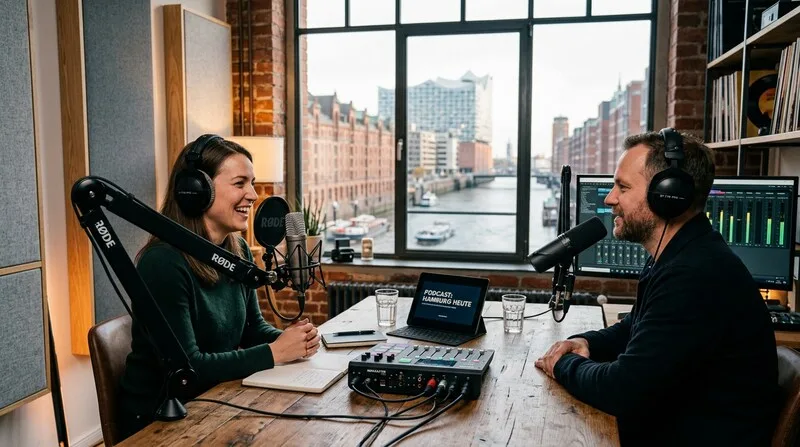
Podcast advertising has quietly become one of the most powerful — and most underestimated — channels in the modern media mix. While brands pour budgets into social feeds and programmatic display, a growing segment of highly educated, high-income, deeply attentive consumers is spending hours each week listening to content that no algorithm can interrupt, no banner blindness can neutralise, and no ad blocker can silence. In 2026, that opportunity is no longer niche: global podcast ad revenue is on track to surpass €7 billion, and brands that understand how to navigate the format are seeing podcast advertising deliver returns that rival — and often exceed — established digital channels. This guide breaks down everything you need to build a results-driven podcast strategy from the ground up.
Why Podcast Audiences Are Different from Every Other Channel
The fundamental reason podcast advertising works differently from display, social, or even streaming advertising is the nature of the listener relationship. Podcast audiences are opt-in by design: they actively chose the show, they follow the host, and they return episode after episode. Research from Edison Research consistently shows that podcast listeners are more likely to have a four-year degree, earn above-average household incomes, and act on host recommendations — a metric no banner ad can dream of. Host-read ads, in particular, benefit from what media planners call the parasocial effect: the listener trusts the host's voice as they would a knowledgeable friend, making a 60-second mid-roll feel less like advertising and more like a genuine recommendation. For brand strategy, this translates directly into premium positioning and measurable purchase intent.
- → Global podcast ad revenue projected to exceed €7 billion in 2026 (IAB / PwC)
- → 65% of podcast listeners say they have acted on a podcast ad recommendation
- → Host-read ads achieve 71% higher brand recall than pre-produced spots played in-stream
- → Average podcast listener consumes 7+ episodes per week — equivalent to 4-6 hours of ad-adjacent content
- → CPM rates for premium podcasts range from €18 to €55 depending on genre, reach, and format
Podcast Ad Formats: Choosing the Right Placement
Not all podcast placements are equal, and choosing the right format is the first strategic decision a brand must make. Pre-roll ads (before the episode begins) offer high exposure but lower engagement — they catch the listener before trust is established. Mid-roll ads, placed 40–60% into an episode, are consistently the highest-performing placement because the audience is already invested in the content and, by extension, receptive to the host's voice. Post-roll ads carry the lowest rates and the lowest completion, making them suitable only for retargeting scenarios where the listener has already encountered the brand. Beyond placement, brands must choose between host-read (native, conversational, integrated into the host's own voice) and produced spots (pre-recorded, brand-controlled audio that plays as a traditional ad unit). For most brand-building goals, host-read mid-roll is the gold standard. For direct-response campaigns with strict message control, produced spots paired with programmatic advertising targeting deliver scalable reach across thousands of shows simultaneously.

Targeting and Media Planning in Podcast Advertising
The best podcast campaigns don't just buy reach — they buy context. A finance brand appearing on a personal-finance podcast isn't interrupting the audience; it's completing the experience.
Podcast targeting has matured significantly. Contextual targeting — selecting shows by category, topic, or keyword — remains the most reliable approach for brand-safe environments and audience alignment. A B2B SaaS company investing in LinkedIn Ads for awareness should consider mirroring that strategy in the podcast space by sponsoring business, technology, and leadership shows that share an audience profile. Demographic and psychographic targeting is increasingly available through major podcast networks and programmatic podcast platforms, allowing brands to layer in signals like age, income, and purchase intent. Geographic targeting is also robust — particularly relevant for regional brands or campaign launches tied to specific markets. For a data-driven media planning approach, brands should use third-party measurement tools to track attribution via vanity URLs, promo codes, pixel-based attribution, and brand lift surveys, building a multi-signal picture of actual campaign performance rather than relying on download numbers alone.
Programmatic vs. Direct Podcast Buys
Brands entering podcast advertising face a build-or-buy decision: go direct with individual shows for premium placements and host relationships, or use programmatic platforms for scale, efficiency, and targeting flexibility. The answer is almost always a hybrid. Direct sponsorships of two or three anchor shows build brand equity and deliver the parasocial trust effect. Programmatic buys extend reach across the long tail of relevant content, ensure frequency capping, and provide the measurement infrastructure that performance marketing teams demand. A well-structured podcast media plan allocates roughly 60–70% of budget to direct placements and 30–40% to programmatic, adjusting based on whether the campaign goal is brand awareness or conversion.
- Pre-roll (0–2 min): high exposure, lower engagement — best for frequency and awareness at scale
- Mid-roll (40–60% in): highest completion and recall — ideal for brand storytelling and offers
- Post-roll (end of episode): lowest cost, lowest completion — suited for retargeting and reminder messaging
- Host-read native: premium rates, highest trust transfer — essential for brand positioning campaigns
- Produced spot: brand-controlled messaging, scalable programmatically — best for direct-response goals
- Series sponsorship: episode intro/outro branding plus mid-roll — builds long-term association with show identity
Creative Best Practices: Writing for the Ear, Not the Eye
Podcast creative fails in one predictable way: brands write scripts for screens and then read them aloud. Audio is a fundamentally different medium. Without visuals, every word must carry weight, every pause must be intentional, and the call-to-action must be memorable enough to survive a commute. Strong podcast creative starts with a problem or story — not a product claim. It names the listener's situation before introducing the solution. It uses a single, repeatable vanity URL or promo code (not a 12-character alphanumeric string). And it ends with clarity: one action, stated twice, in plain language. For video production teams accustomed to visual storytelling, the shift to audio-only requires deliberate adaptation — the same narrative arc, compressed into 60 seconds, without a single frame to lean on. Brands investing in content marketing at scale should treat podcast scripts as a distinct content format with its own brief, its own tone guide, and its own quality review process separate from written or visual content.
Briefing Host-Read Ads: The 3-Point Framework
- Provide context, not a script: Give the host your brand story, the key benefit, and the offer — then let them find their own words. Scripted host-reads sound scripted, and listeners notice immediately.
- Anchor to a specific listener problem: Work with the host to frame the ad around a real pain point their audience shares. This transforms the ad from interruption into relevant content.
- Test, measure, iterate: Run two or three shows as a pilot with tracked URLs, measure incremental lift, then scale budget into the shows with the strongest cost-per-acquisition before committing to series sponsorships.
- → Vanity URL attribution captures approximately 25–35% of actual podcast-driven conversions; brand lift studies reveal the full picture
- → Podcast listeners are 4.4x more likely to visit a brand's website after a host-read ad than after a display ad (Nielsen)
- → Average cost per acquisition (CPA) in podcast advertising: €18–€45 for e-commerce, €60–€120 for B2B lead generation
- → Brands running 6+ consecutive weekly sponsorships see 2.3x higher brand recall than single-episode placements

Budgeting, Scaling, and Integrating Podcast into the Broader Media Mix
Podcast advertising doesn't replace other channels — it amplifies them. Brands that sync podcast messaging with social and OOH consistently report 20–30% higher overall campaign recall than those running podcasts in isolation.
For most mid-size brands entering podcast advertising for the first time, a sensible pilot budget sits between €5,000 and €15,000 — enough to secure two or three direct sponsorships over four to six weeks, or a programmatic test across a relevant category. From this foundation, measurement data drives scaling decisions. The most important integration principle is message alignment: whatever the brand is saying in its out-of-home advertising, its social media content, and its email sequences should be reflected — not duplicated — in podcast creative. Consistency of theme, not copy, is what builds the mental availability that makes campaigns compound in effectiveness over time. Brands with strong brand strategy foundations find podcast adoption easiest because the channel rewards clarity: a muddled brand proposition sounds even worse when spoken aloud by a host trying to explain what you do in 90 seconds.
Is Podcast Advertising Right for Your Brand? A Practical Checklist
Podcast advertising delivers strong results for brands whose target audience is demonstrably podcast-heavy — typically 25–55, educated, income-conscious, and time-pressed. It works exceptionally well for direct-to-consumer brands with a clear value proposition and a trackable conversion point, for B2B companies targeting decision-makers in specific industries, and for any brand investing in long-term positioning alongside employer branding or thought leadership. It is less suited to campaigns requiring immediate mass reach or visual product demonstrations. If your attribution infrastructure can handle multi-touch measurement, your creative team can write for audio, and your media strategy has room for a channel that compounds over weeks rather than days — podcast advertising deserves a meaningful line in your next planning cycle. Our strategy team regularly helps brands identify where podcast fits in the media mix and how to structure pilots that generate actionable data fast.