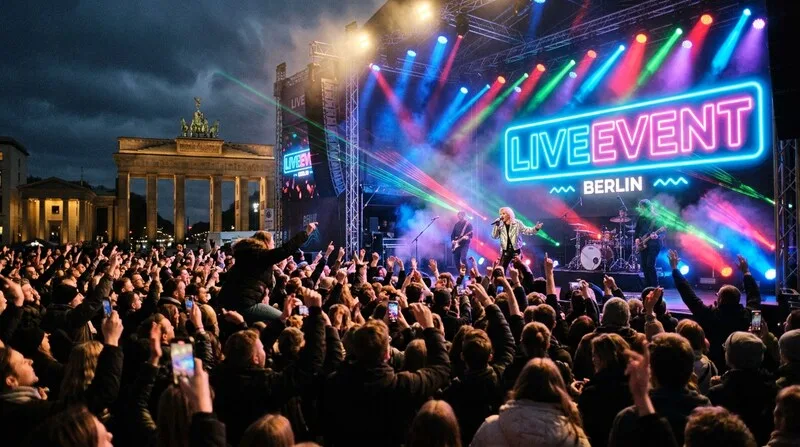
Brand awareness is the foundation of every commercial relationship — yet it remains one of the most undervalued and poorly measured assets in most marketing plans. While clicks, conversions and ROAS dominate boardroom dashboards, the upstream metric that makes those numbers possible — whether your target audience actually knows who you are — is rarely tracked with the same rigour. At ONE Agency, our strategy and consulting team works with brands across sectors to close that gap. This guide gives you the frameworks, KPIs and measurement tools to make brand awareness a concrete, board-ready metric.
Why Brand Awareness Measurement Matters More Than Ever
In an era of algorithmic feeds, zero-click search and fragmented media consumption, brands that fail to track awareness are flying blind. The 2024 LinkedIn B2B Institute report found that 77% of B2B purchase decisions begin with unaided brand recall — meaning the buyer already had a shortlist before your sales team ever made contact. For consumer brands, the data is equally stark: Nielsen's Global Marketing Report 2024 showed that brands in the top awareness quartile generate 2.4x more long-term revenue growth than those in the bottom two quartiles. Awareness is not a soft metric. It is a leading indicator of revenue. The challenge is that traditional performance marketing tools — Google Ads dashboards, Meta Ads Manager, GA4 — are built to measure the bottom of the funnel. They tell you who bought. They cannot tell you why 90% of your potential market has never considered you. That gap is where branding and creative strategy must be measured differently.
- → 77% of B2B purchase decisions start with unaided brand recall (LinkedIn B2B Institute, 2024)
- → Top-awareness-quartile brands generate 2.4x more long-term revenue growth (Nielsen, 2024)
- → Only 23% of CMOs say they can quantify brand awareness ROI confidently (Gartner, 2023)
- → Brands with high unaided awareness reduce paid customer acquisition cost by up to 38%
- → Share of search correlates with market share at r=0.86 across FMCG categories (Kantar, 2023)
The Core KPIs for Measuring Brand Awareness
Measurement begins with selecting the right indicators. Brand awareness KPIs fall into three tiers: survey-based, behavioural and digital-proxy metrics. Each layer reveals a different dimension of your brand's presence in the market.
Tier 1: Survey-Based Awareness Metrics
Unaided awareness (also called spontaneous recall) asks respondents to name brands in a category without prompting. Aided awareness presents a brand name and asks if the respondent recognises it. The gap between the two is one of the most strategically meaningful numbers in marketing — it shows how much of your audience knows you exist versus how many have a genuine, active memory of your brand. Brand consideration and brand preference extend this further: consideration asks whether someone would include you in an active purchase decision; preference asks whether they would choose you over alternatives. These survey metrics should be tracked quarterly via tools like Kantar BrandZ, YouGov BrandIndex or custom brand tracking studies. For TV and streaming advertising campaigns, brand lift studies — offered natively by YouTube, Meta, Spotify and programmatic DSPs — provide pre/post measurement within actual campaign audiences.
Tier 2: Digital Proxy Metrics for Brand Awareness
For brands without the budget for continuous brand tracking studies, digital behavioural signals serve as reliable proxies. Share of search — your brand's proportion of total search volume within your category — is the most predictive single metric available without a panel study. Track it via Google Trends or SEMrush. Direct traffic volume in GA4 captures users who type your URL directly, signalling genuine brand recall. Branded search impression share in Google Ads and branded keyword click volume in SEO both measure the downstream effect of awareness investments. Social listening metrics — organic brand mentions, share of voice on TikTok and Instagram, and earned media value — round out the digital picture. Platforms like Brandwatch, Talkwalker and Mention.com aggregate this data at scale.

Measurement Frameworks: From Impressions to Impact
"Impressions are not awareness. Reach is not recall. The job of measurement is to close the distance between media delivery and mental availability." — Les Binet & Peter Field, The Long and the Short of It
One of the most persistent mistakes in brand measurement is treating gross impressions as a proxy for awareness. Reach — the number of unique individuals exposed to your message — is a better foundation, but still insufficient. The meaningful metric is effective reach: the proportion of your target audience who have been exposed enough times, in the right contexts, to encode your brand into memory. Neuroscience-backed media planning standards suggest a minimum of three quality exposures within a campaign period are required for initial brand encoding. For competitive categories, seven or more exposures are needed to shift consideration. This is why strategic media planning — not just media buying — is central to awareness ROI. Your channel mix, creative quality and frequency management determine whether your spend translates into mental availability or wasted impressions.
- Unaided brand recall: benchmark quarterly against category competitors
- Share of search: track monthly via Google Trends segmented by market
- Branded search volume (SEO + paid): monitor via GA4 and Google Search Console
- Brand lift studies: run alongside major paid campaigns on YouTube, Meta and Spotify
- Share of voice (SOV): track earned + paid + owned across social channels
- Direct traffic growth: measure month-over-month in GA4 as a recall indicator
- Net Promoter Score (NPS): use as a downstream proxy for brand strength
- Earned media value (EMV): aggregate via social listening tools for PR and influencer campaigns
Channel-Specific Measurement Approaches
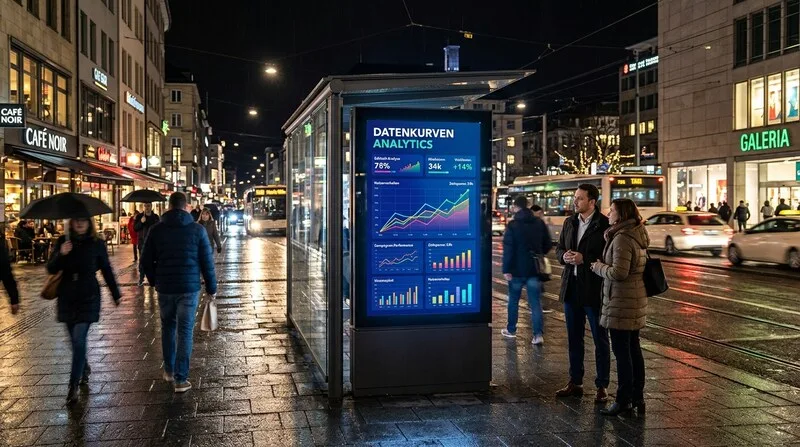
Different channels require different measurement lenses. Out-of-home advertising — billboards, digital screens, transit — is measured via reach and frequency models using geolocation data (Geopath in the US, Ströer analytics in Germany). Post-campaign brand lift surveys, either via panel providers or app-based exposure matching, are increasingly standard for large OOH buys. For influencer marketing, awareness metrics include video view rate, story reach, mention volume and the lift in branded search queries during and after campaign windows. Studies by CreatorIQ show that influencer campaigns drive a median 12% lift in branded search within 72 hours of content going live. TV advertising — both linear and connected — is measured via third-party panel data (AGF/GfK in Germany), second-screen search uplift analysis and dedicated brand lift tools from streaming platforms. Audio advertising via podcast and radio channels uses host-read recall studies, promo code attribution and branded search uplift as primary awareness signals.
- → OOH campaigns generate average aided awareness lift of +18 percentage points per 4-week flight (Ströer/Kantar)
- → Influencer campaigns drive +12% median branded search lift within 72 hours (CreatorIQ, 2024)
- → TV brand lift studies show +9-22% unaided awareness gain per GRP point in automotive and FMCG
- → Podcast host-read ads achieve 71% unaided brand recall among listeners (Edison Research, 2023)
- → Combined TV + Digital campaigns deliver 31% higher brand recall than single-channel exposure (Nielsen)
Building a Brand Awareness Measurement Stack
A functional measurement stack for brand awareness does not require an enterprise budget. It requires intentional architecture. Start with a baseline: run a brand tracker study (even a lightweight online panel survey via Pollfish or SurveyMonkey Audience) before any major campaign to establish your unaided and aided awareness scores among your target demographic. Activate digital proxies: set up GA4 segments for direct traffic and branded organic sessions; pull branded keyword data from Google Search Console weekly; configure share of search tracking in Google Trends for your top three category keywords. Layer in campaign measurement: for every significant paid campaign — whether via TikTok Ads, YouTube Ads or programmatic display — activate the native brand lift study function. These are often free or low-cost on platforms with sufficient budget thresholds. Connect the dots: build a simple brand health dashboard in Looker Studio that pulls branded search volume, direct traffic, share of voice and any available lift study results into a single view updated monthly. Review it alongside your performance marketing dashboard — not separately. Awareness and conversion are not competing metrics. They are sequential. The brands that win in 2026 and beyond will be those that treat mental availability as a managed asset, measured with the same discipline as click-through rates and cost per lead. If your current marketing strategy has no mechanism to track whether your target audience knows you exist, that is the highest-priority gap to close.
- Establish a baseline brand tracker study before your next major campaign
- Configure GA4 to segment direct traffic and branded organic sessions separately
- Set up Google Trends share-of-search monitoring for your top category keywords
- Activate brand lift studies on all major paid channels (Meta, YouTube, TikTok, DV360)
- Build a unified brand health dashboard combining awareness, search and social SOV data
- Review brand KPIs monthly alongside performance metrics — never in isolation
- Run quarterly competitor benchmarking on aided/unaided awareness and consideration scores
From Measurement to Strategy: Closing the Loop
"Half the money I spend on advertising is wasted; the trouble is I don't know which half." — John Wanamaker. In 2026, with the right measurement stack, you can finally answer that question.
Measurement without action is reporting. The strategic value of brand awareness KPIs is that they tell you where to invest more and where to stop. If your aided awareness is high but consideration is low, your creative is failing to communicate a compelling reason to choose — that is a brand strategy and creative problem. If your unaided awareness is low among a specific demographic despite strong media investment, your channel mix or targeting is wrong — that is a media planning problem. If your share of search is rising but direct traffic is flat, you have awareness but not enough salience — that is a content marketing and brand experience problem. The frameworks and KPIs in this guide are not academic exercises. They are the tools that separate brands that grow predictably from those that chase short-term performance metrics while their long-term competitive position erodes. Build your measurement stack, set your baselines and start treating brand awareness as the leading revenue indicator it has always been.
Also recommended: Brand Ambassador Programs: The Complete Strategy Guide for 2026