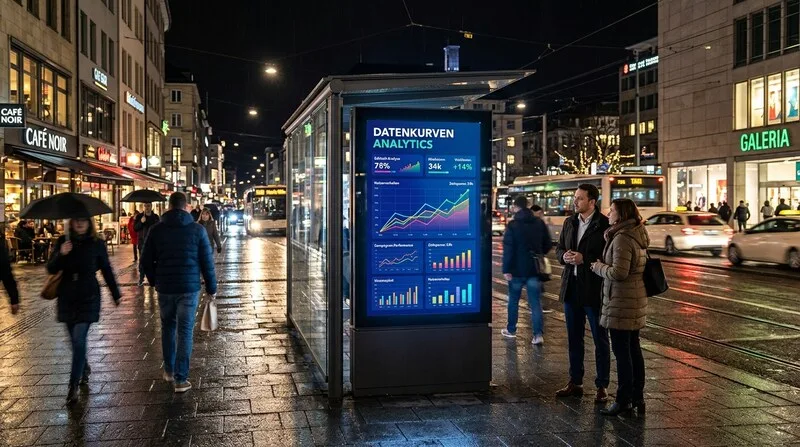



Out-of-home advertising is experiencing a renaissance. While digital ad fatigue grows and attention metrics decline, OOH offers something rare: unavoidable, brand-safe, non-skippable placement in the real world. Global OOH revenues grew 10% in 2025 and are projected to reach $50 billion by 2028.
The OOH landscape has three distinct segments: classic OOH (static billboards, transit posters, street furniture), digital OOH (DOOH: digital screens that can be programmatically targeted and updated in real time), and experiential OOH (takeovers, installations, branded environments). Each serves a different role in the marketing mix.
DOOH is the fastest-growing OOH segment: digital screens can now be bought programmatically, targeted by weather, time of day, location data and even real-time events. A coffee brand can serve its ad when temperature drops below 10 degrees. A sports sponsor can trigger creative when a local team scores. This contextual relevance drives recall 2-3x higher than static equivalents.
OOH works best as an amplifier, not a standalone channel. Brands that run OOH in combination with paid social see 26% higher social engagement and 14% higher search volume for branded terms. The physical presence creates credibility that digital-only brands cannot replicate at the same cost.