

For five years, "AI in marketing" meant chatbots and subject-line optimization. In 2026, it means something categorically different: generative models producing campaign-ready creative in minutes, predictive algorithms managing six-figure media budgets autonomously, and personalization engines delivering genuinely individual experiences at scale. The gap between early adopters and laggards has become a competitive moat. This guide explains what has actually changed -- and what still requires human expertise.
Why AI Is Now Practical (Not Hype)
The shift happened at the model layer. GPT-4, Claude 3, and Gemini Ultra moved AI from narrow task automation to generalist reasoning. For marketers, this means a single model can research a product, write five ad variants, critique them against brand guidelines, and produce a media brief -- all in one session. Simultaneously, image and video generation reached commercial quality thresholds. Midjourney v6 and Sora produce assets that pass brand review. The tooling matured to meet the capability.
A 2025 Salesforce survey found 68% of marketing teams now use AI tools weekly -- up from 29% in 2023. But usage distribution is uneven: the top quartile of AI-adopting brands generate 3.2x more creative variants per campaign and achieve 22% lower cost-per-acquisition than the bottom quartile. The gap is widening.
"AI doesn't replace creative strategy. It removes the bottleneck between strategy and execution -- so the strategy gets tested faster and improved more often."
AI in Creative Production
Creative production is where AI delivers the most immediate ROI. A campaign that previously required three weeks of design, copy, and revision cycles can now produce a first-round asset set in 48 hours. Generative tools handle the execution; humans handle the direction and quality gate.
The practical workflow at agencies in 2026: a creative director writes a prompt brief (positioning, tone, visual style, restrictions). The AI produces 20--30 variants across formats -- static, carousel, video, and story. The team selects 8--10 for human refinement and brand compliance review. The output enters A/B testing within days, not weeks.
- Copy generation: ChatGPT, Claude, Jasper -- used for ad copy, email sequences, landing page headlines
- Visual production: Midjourney, Adobe Firefly, Stable Diffusion -- product imagery, lifestyle shots, concept art
- Video: Runway ML, Sora (limited), HeyGen -- for short-form ad content and personalized video
- Brand compliance: Frontify AI, Bynder -- automated checks against style guides before creative leaves the agency
AI-Driven Targeting and Personalization
Meta's Advantage+ and Google's Performance Max are the most widely deployed AI targeting systems. Both operate on the same principle: provide creative assets and a conversion goal, and the algorithm determines who sees what, when, and on which placement. The advertiser surrenders granular audience control in exchange for algorithmic optimization that often outperforms manual targeting within two to three weeks of learning.
For brands with first-party data, the picture is richer. AI models trained on CRM data can predict churn probability, lifetime value, and next-purchase timing. These predictions feed directly into campaign suppression lists and personalized messaging sequences. A customer predicted to churn receives a retention offer; a high-LTV customer receives an upsell. The personalization is not cosmetic -- it is structurally different messages to structurally different audience segments.
See how these targeting approaches connect to performance marketing trends in 2026 for the full picture of where the channel is heading.
Predictive Analytics and Campaign Optimization
Traditional campaign management is reactive: you see results, then adjust. AI-driven optimization is predictive: the model adjusts before performance degrades. Google's Smart Bidding adjusts bids up to 70 million times per day based on real-time signals -- device, location, time, audience membership, query semantics -- that no human team could process manually.
At the campaign strategy level, AI forecasting tools (Rockerbox, Northbeam, Triple Whale) model how budget allocation changes affect projected revenue across channels. A media planner can simulate shifting 15% of budget from paid social to paid search and see the projected impact on total conversion volume before making the change. This transforms budget planning from intuition-based to model-validated.
Understanding which KPIs actually matter remains critical -- AI optimization is only as good as the conversion event you train it on. Optimizing for add-to-cart instead of completed purchase produces very different results.
AI for Content Marketing
Content volume requirements have grown faster than headcount in almost every marketing team. AI addresses this gap directly. A single strategist with AI tooling can now produce research-backed articles, social post calendars, email sequences, and video scripts at a volume that previously required a team of five. The role shifts from production to curation and quality control.
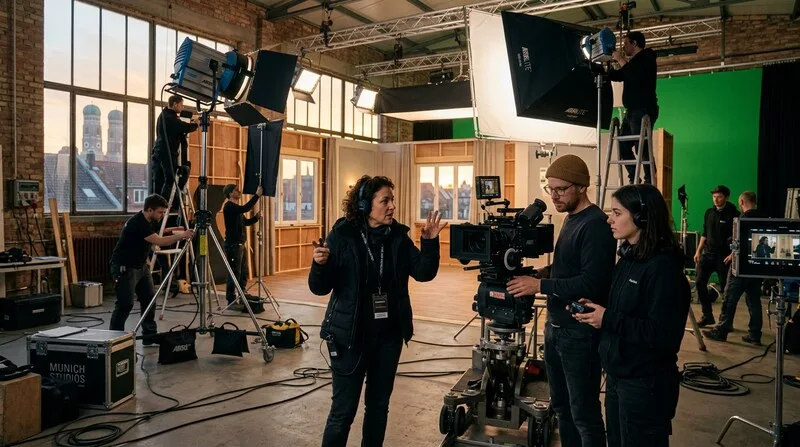
The practical constraint is differentiation. AI-generated content trained on the same public data produces similar outputs across competitors. The brands winning with AI content in 2026 inject proprietary data -- original research, customer interviews, internal expert perspectives -- that the model cannot source from public training data. AI handles structure and prose; human expertise handles the insights that make content worth reading.
What AI Cannot Replace
The capabilities AI lacks are precisely the capabilities that define great marketing: genuine cultural intuition, brand courage, earned relationships, and strategic judgment under uncertainty. An AI model will not tell you to run a campaign that contradicts current market consensus because that contradiction is your competitive advantage. It will not decide that a brand needs to stand for something uncomfortable. These are human calls.
- Brand strategy: Positioning, differentiation, and brand character require human cultural understanding
- Creative risk: Breakthrough creative often violates existing patterns -- AI optimizes toward them
- Stakeholder trust: Client relationships, pitches, and partnerships are built on human credibility
- Ethical judgment: What should and should not be said in a given cultural moment
The Human-AI Workflow
The most productive marketing teams in 2026 are not the ones with the most AI tools -- they are the ones with the clearest division of labor between human and machine. The framework that works: humans own strategy, creative direction, and final judgment. AI owns production velocity, data processing, and optimization execution.
At ONE Agency's performance marketing practice, this means strategists spend more time on brief quality and less on execution mechanics. Better briefs produce better AI outputs, which produce better results. The competitive advantage migrates up the stack -- toward judgment, not production.
Frequently Asked Questions: AI Marketing
What is AI marketing?
AI marketing is the use of artificial intelligence technologies -- including machine learning, natural language processing, and computer vision -- to automate, optimize, and personalize marketing tasks. This spans creative production (generating ad copy and visuals), audience targeting (predictive modeling), campaign optimization (real-time bid adjustments), and analytics (forecasting and attribution). AI marketing does not replace strategy but executes it faster and at a scale that human teams cannot match manually.

What AI tools are best for marketing?
The most widely used AI marketing tools in 2026 are: ChatGPT and Claude for content drafting and brief generation; Midjourney and Adobe Firefly for visual asset creation; Google Performance Max and Meta Advantage+ for AI-driven campaign optimization; Persado for emotionally optimized ad copy; Jasper for large-scale content production; and Brandwatch for AI-powered social listening. For analytics and attribution, tools like Rockerbox and Northbeam use ML models to handle multi-touch attribution across channels.
Will AI replace marketing agencies?
No. AI replaces specific tasks within marketing -- repetitive production, basic A/B testing, routine optimization -- but not the strategic, creative, and relational work that agencies provide. Campaign strategy, brand positioning, creative direction, and client relationships require human judgment that AI cannot replicate. What changes is agency structure: fewer junior production roles, more senior strategy and AI-fluent operators. Agencies that adopt AI accelerate output and improve margins; those that ignore it lose competitiveness.