Brand Architecture: The Foundation of Every Branding Strategy
Branding begins with a strategic decision many companies underestimate: brand architecture. It determines how your brands relate to each other — and whether investment in the master brand transfers to sub-brands or vice versa.
Monolithic Branding
One master brand, all products underneath. Maximum brand equity and budget efficiency. Example: Google (Search, Maps, Drive all under Google).
Endorsed Brand
Sub-brand is independent, parent brand visible in the background. More flexibility for different audiences. Example: Courtyard by Marriott.
House of Brands
Completely independent brands, parent brand deliberately hidden. Maximum audience flexibility. Example: Procter & Gamble with Ariel, Pampers, Gillette.
Visual Identity System: Beyond the Logo
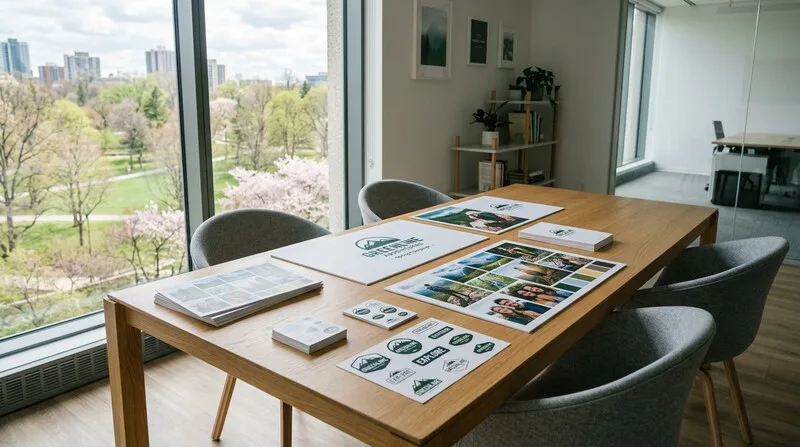
A logo is the entry point — not a complete Visual Identity System. Professional branding delivers a system that works consistently across all media and teams.
- Colour system: Primary palette, secondary palette, contrast rules, accessibility (WCAG 2.1 AA)
- Typography system: 2–3 font families, hierarchy rules (H1–H4), tracking, line-height
- Image language: Photo style, illustration guidelines, stock photo rules, AI image guidelines
- Grid & layout: Column grid, spacing, white-space principles
- Iconography: Style, stroke weight, size system
"Consistent brand presentation across all platforms increases revenue by up to 23% — according to Lucidpress. A solid visual identity system is not a cost centre, it is a revenue lever."
Branding Services Overview
From brand strategy to finished brand manual.
Frequently Asked Questions
A branding agency develops a company's strategic and visual identity: brand strategy, positioning, naming, logo and visual identity system (colours, typography, image language) through to a complete brand manual. The difference from an ad agency: branding builds long-term brand equity; advertising communicates it short-term.
Full brand development (strategy + visual identity + manual): £20,000–£150,000 depending on complexity. Logo + visual identity (without strategy): £5,000–£25,000. Brand refresh (optimising existing branding): £8,000–£40,000. Ongoing brand management: £2,000–£8,000/month.
Brand architecture defines the relationships between brands in a portfolio. Three models: Monolithic branding (one master brand, e.g. Google), Endorsed brand (parent brand visible, sub-brand independent, e.g. Courtyard by Marriott), House of Brands (independent brands, e.g. Procter & Gamble with Ariel and Pampers). The right choice depends on company structure, audiences and expansion strategy.
Beyond the logo: colour system (primary and secondary palette, WCAG contrast rules), typography system (2–3 font families, hierarchy rules), image language (photo style, illustration guidelines), grid & layout system and iconography. All documented in a brand manual for consistent application by every team.
Brand audit & competitive analysis: 1–2 weeks. Positioning workshop & strategy: 2–3 weeks. Visual identity development (3 concept directions → refinement): 4–8 weeks. Brand manual & handover: 1–2 weeks. Total: 8–16 weeks for a complete branding project.